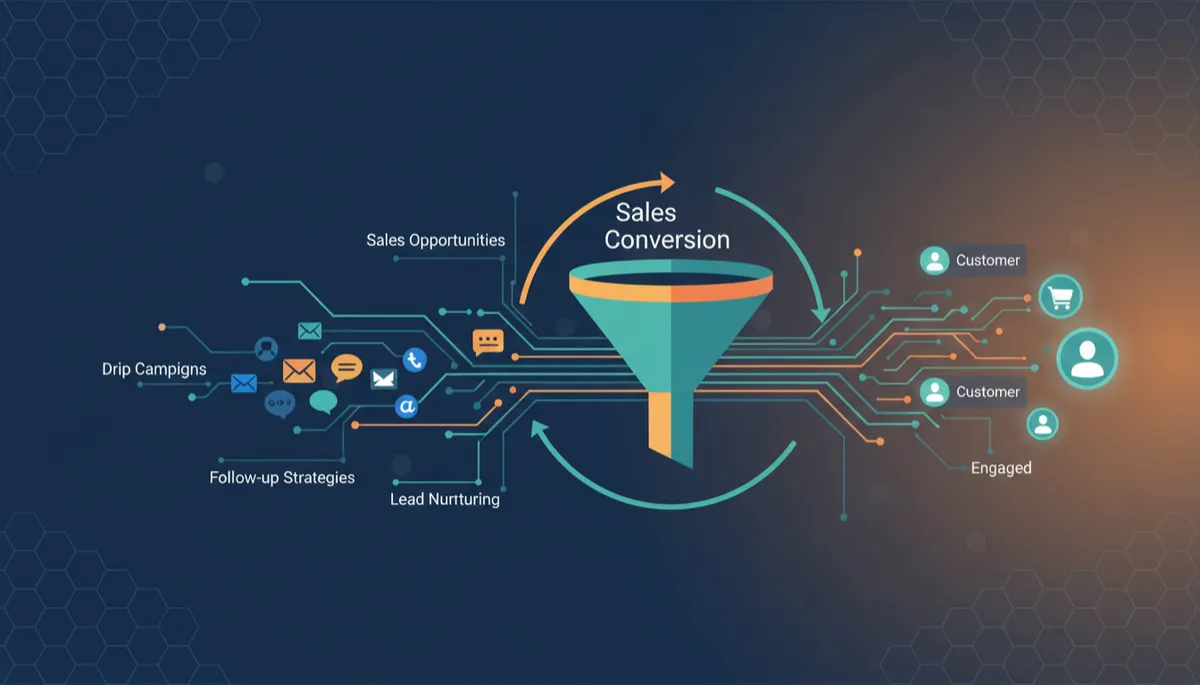
Boost Sales with Effective Follow-Up Strategies
Sales Conversion, Drip Campaigns, Email Marketing
The Sale You’re Missing May Be in Your Follow-Up
Many local businesses work hard to generate leads, only to let potential customers quietly drift away. The problem usually isn’t your offer, your reputation, or even your price—it’s what happens after someone says, “Not yet.” With the right drip campaigns and follow-up strategies, “not yet” can become “yes” far more often—and far more predictably.
The Real Reason “Interested” Prospects Disappear
If you’re like most established local business owners, you’ve heard all of these before:
“This looks great, but the timing isn’t right.”
“We need to think about it and get back to you.”
“Let’s revisit this next quarter.”
Most owners treat those responses as polite rejections. In reality, they’re often just honest signals of, “Not yet.” The prospect is busy. They have competing priorities. Their cash is tight this month. Kids are sick. A key employee quit. Life is happening.
The problem is that without a clear follow-up system, those “not yet” prospects never hear from you again—or they only hear from you once or twice, and then you move on. Meanwhile, someone else follows up more consistently and wins the sale you worked to create.
📌 Key Takeaway: Most of your lost sales aren’t true “no’s.” They’re unstructured “not yet’s” that never get the consistent, thoughtful follow-up they deserve.
How Drip Campaigns Turn “Not Yet” Into Your Next Customer
Drip Campaigns are simply a series of pre-planned, scheduled messages—usually via Email Marketing—that go out automatically over time. Instead of relying on memory or sticky notes, you’re building a system that:
Stays in touch with leads who said “not yet” without you having to chase them manually.
Educates and reassures them over time—this is Lead Nurturing in practice.
Keeps your business top-of-mind so when the timing is right, you’re the obvious choice.
For a local service business—whether you run a home services company, a professional practice, or a specialty trade—this means the follow-up happens even when you’re on job sites, handling emergencies, or putting out fires. The system works in the background, quietly increasing your Sales Conversion without increasing your personal workload.
💡 Pro Tip: A simple, consistent drip campaign will beat sporadic, one-off follow-ups every time—especially in a busy local business.
Follow-Up Strategies That Actually Work for Local Businesses
Many owners think follow-up means “check in and see if they’re ready to buy.” That’s part of it—but if every message is basically, “Are you ready yet?” people tune out quickly. Effective Follow-up Strategies do three things:
Reassure: You reduce risk and anxiety by answering the questions they may be too busy—or embarrassed—to ask.
Educate: You help them understand the problem, the consequences of delay, and the value of solving it properly.
Invite: You give them clear, low-friction ways to move forward when they’re ready.
When your follow-up is built around reassurance, education, and clear invitations, prospects feel supported rather than pressured. That’s how you build real Customer Engagement—and that’s what leads to higher Sales Conversion without having to become a “pushy salesperson.”
Lead Nurturing: Moving People from “Maybe” to “Ready”
Lead Nurturing is simply the process of staying in front of interested prospects long enough—and helpfully enough—that when they are ready to act, they naturally choose you. In a local market, this is a major competitive advantage because most competitors stop after one or two touches.
Consider a homeowner who contacts three roofing companies for quotes. All three send estimates. Only one company follows up with a short series of helpful emails:
A simple explanation of what’s included in their quote.
A checklist of what to look for in a roofing contractor.
A short story about a similar customer who waited too long and paid more.
That company has done more than “follow up.” They’ve nurtured the lead, reduced confusion, and demonstrated that they’re organized and trustworthy. Even if their price isn’t the lowest, they’re now the safe, obvious choice.
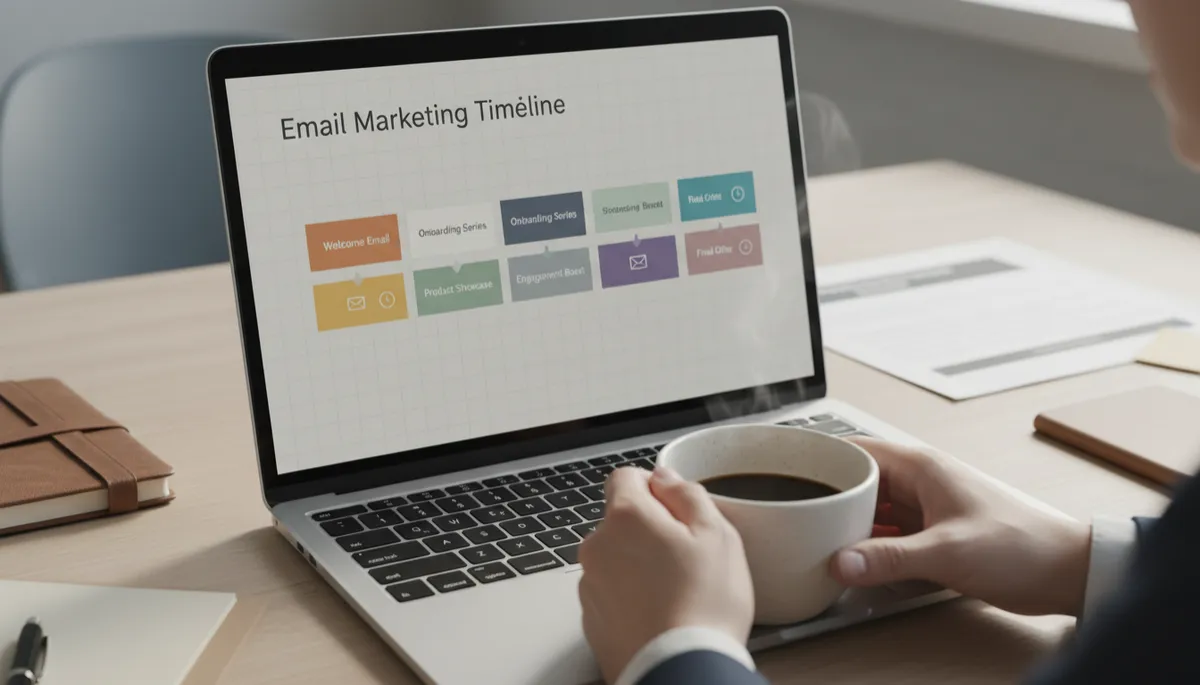
A simple, scheduled five-message sequence can quietly nurture leads while you run the business.
Customer Engagement: Staying Present Without Being Annoying
Many owners worry that more follow-up will annoy people. The truth is, people are only annoyed by follow-up that is:
Irrelevant to their situation,
Obviously self-serving, or
Too frequent and pushy.
When your Email Marketing is built around genuine help, clarity, and respect for their time, it becomes a form of Customer Engagement that people actually appreciate. They’re busy. They forget. Your thoughtful follow-up becomes a service, not a nuisance.
📌 Key Takeaway: Engagement comes from relevance and value. If every message helps them make a better decision, you earn the right to stay in touch.
The Importance of Consistent Follow-Up (Not Heroic Follow-Up)
At Leon Beeloo, we see a common pattern in established local businesses: the owner is willing to make heroic efforts—late-night calls, weekend estimates, last-minute proposals—but there is no simple, consistent follow-up system behind those efforts. As the business grows, that inconsistency becomes expensive.
Consistent follow-up beats heroic follow-up because it:
Doesn’t depend on your memory or your current energy level.
Treats every qualified lead with the same level of care and attention.
Creates predictable, repeatable Sales Conversion instead of random wins.
When you build a simple drip campaign, you’re not just “doing more marketing.” You’re putting a small but powerful system in place that helps your business become less dependent on you personally—one of the core shifts required to move from indispensable operator to true business owner.
Using Existing Content: You Don’t Need to Start from Scratch
One of the biggest objections we hear is, “I don’t have time to write a bunch of emails.” The good news: you probably already have 80% of what you need for an effective drip campaign sitting inside your business right now.
Look at the content you already use every day:
Answers you give to common questions during sales calls or site visits.
Explanations you share about your process, pricing, or guarantees.
Stories of customers who waited too long—or who are glad they acted quickly.
Checklists, brochures, or FAQs you already hand out or send as PDFs.
All of that is content. You don’t need to become a professional copywriter. You just need to organize what you already say and share into a simple, scheduled sequence. At Leon Beeloo, we regularly help owners turn existing materials into effective Email Marketing that nurtures leads with minimal extra effort.
💡 Pro Tip: Start by recording one or two of your sales conversations (with permission). Transcribe them and highlight the parts that explain, reassure, or tell stories. Those are the building blocks of your drip campaign.
A Simple Five-Message Drip Sequence You Can Use Right Away
You don’t need a 20-message campaign to see results. For most local service-based businesses, a simple five-message sequence can significantly improve Sales Conversion from “not yet” leads. Here’s a practical structure you can adapt to your business:
Message 1: Same Day – Clarify and Confirm
Purpose: Confirm you’ve received their inquiry or sent their quote, and make the next step crystal clear.
Thank them for the opportunity.
Briefly restate what they asked for or what you proposed.
Tell them exactly how to move forward (reply, schedule, call, sign, etc.).
Message 2: Day 2–3 – Answer the “Unasked” Questions
Purpose: Reduce hesitation by addressing the common concerns that slow decisions down—price, disruption, timing, trust.
Share a short FAQ or a simple “What to Expect” overview.
Mention your guarantee, warranties, or after-service support if relevant.
Message 3: Day 5–7 – Tell a Relevant Success Story
Purpose: Show them someone like them who got a good outcome by choosing to move forward.
Share a brief case study in plain language: the situation, what you did, and the result.
Include one specific detail that makes it real (timeline, savings, avoided problem, etc.).
Message 4: Day 10–14 – Reframe the Cost of Waiting
Purpose: Gently remind them that delaying the decision has a cost—whether in money, time, stress, or missed opportunity.
Explain one or two real consequences of waiting too long (higher repair costs, lost revenue, safety risks, etc.).
Reaffirm that you’re available to answer questions—no pressure.
Message 5: Day 21–30 – Final Check-In and Open Door
Purpose: Respectfully close the loop while keeping the relationship open for the future.
Let them know you’re closing out quotes or files, but happy to revisit when the timing is right.
Invite them to keep your details handy and reach out when circumstances change.
That’s it: five messages, mostly built from content you already use. Once set up, this drip campaign runs automatically for every qualified lead who isn’t ready to say “yes” on day one.
📌 Key Takeaway: A simple five-message sequence can turn a pile of “not yet” leads into a steady stream of new customers—without adding to your daily to-do list.
Why This Matters for Profit, Predictability, and Your Time
For established local businesses in the $500K–$5M range, the goal isn’t just “more leads.” You’re looking for better profit, predictability, and freedom. Drip campaigns and structured follow-up support that goal in three important ways:
Higher Sales Conversion from Existing Leads: You’ve already paid for the marketing, networking, and reputation that generated the inquiry. Better follow-up increases the return on the effort you’re already making.
More Predictable Revenue: When a portion of your future sales are quietly maturing in an automated lead nurturing sequence, you ’re less dependent on last-minute deals or frantic activity at month-end.
Less Owner Dependence: Your team can plug leads into a defined follow-up process instead of everything needing your personal touch and memory.
This is exactly the kind of practical, measurable improvement Leon Beeloo focuses on—systems that don’t just chase short-term growth, but genuinely strengthen your business for the long term.
Your Next Step: Turn Follow-Up into a Profit Lever
Somewhere in your CRM, inbox, or quote log is a list of people who said, “Not yet.” They already know who you are. Many of them liked what you offered. They simply weren’t ready—then. With the right drip campaigns, thoughtful follow-up strategies, and a simple five-message sequence, those leads can become one of the most profitable, predictable parts of your business.
You don’t need a complex marketing funnel or a big technology project. You need a clear plan, a few well-crafted messages, and a system that runs without constant owner involvement. That’s how you turn follow-up from something you “try to remember” into a reliable profit lever that supports the business you’ve already built.
💡 Pro Tip: Start with one segment—recent quotes from the last 60–90 days. Build your five-message sequence just for them. Measure the extra closed work that comes from that one improvement.
Learn more about Drip Campaigns on our next Monday Training (CLICK HERE)
Explore Where Follow-Up Fits in Your Bigger Profit Picture
Better follow-up is just one of several levers you can pull to make your business more profitable, more predictable, and less dependent on you personally. If you’d like to see how big the opportunity might be in your specific situation, Leon Beeloo offers a focused way to find out.
Take the Profit Acceleration Assessment. Bring three numbers—your annual revenue, gross margin, and operating profit—and in approximately 45 minutes we’ll work with you to uncover where additional profit opportunities may exist in the business you’ve already built. You’ll receive a personalized Profit Acceleration Roadmap showing what deserves attention and what to prioritize next—including where smarter follow-up and lead nurturing could give you the biggest return with the least extra complexity.
The sale you’re missing may not require more advertising, more staff, or more hours from you. It may simply require a better system for turning “not yet” into “yes”—consistently, predictably, and with less dependence on the owner. That’s the kind of growth that supports your long-term business health, not just this month’s sales target.